The other day, in the middle of a conversation about something else, my buddy Coyotebanjo described several of his primary activities – playing music, teaching, and doing musicology, and even blogging – as “practices.” He said “Those are my practices.”
This got me to thinking. How do we define our activities as “practice?” Coyotebanjo’s view is quite different from the way many of us look at practice. For musicians, especially, “practice” can become something that the reality of everyday life seems to keep us from doing anywhere near as much as we’d like. “If I didn’t have so many damned students, I’d have time to practice.” (What is wrong with this picture?) The same goes for spiritual practice: how many of us attempt to meditate, only to find that we blow it off regularly because “life” got in the way? This definition of “practice” seems to be something that is only allowed to us as a reward. It’s reserved for a special activity of some kind, exclusive of our other activities. “You can practice your violin when your taxes are done.” “You can meditate after the laundry is folded or the article is edited.”
The word "practice," according to Merriam-Webster, came into the English language through a long convoluted path from the Greek praktikos, through its Latin and Middle French equivalents, to the Middle English practisen. Leaving out literary or archaic usages, as a transitive verb, practice means 1) to carry out, or apply; or 2) to perform or work at repeatedly so as to become proficient, or to train by repeated exercises. As an intransitive verb, it means 1) to do repeated exercises for proficiency; 2) to pursue a profession actively; 3) to do something customarily.
But there is a way of using the word “practice” that Merriam-Webster does not include. The dictionary definition includes brushing one’s teeth and learning how to tie one’s shoes. These are important activities, obviously, but there is an additional meaning we give to the word practice when it is applied to something that we “do customarily” or “perform or work at repeatedly” in order to create meaning in our lives, or to improve a skill that is edifying to us in some sort of meaningful, internally resuscitating or nurturing way. These are the sorts of practices that we punish ourselves by blowing off – but in fact, in Coyotebanjo’s world, these are not regarded as “special” – this kind of practice is what you do, because there is nothing more important, frankly, than creating meaning in your life. And why does it have to be limited to one thing? It’s ALL the things you choose to do on a regular basis because those activities have meaning to you or create meaning for you.
Does your work have meaning to you? Then it’s a practice. Does gardening have meaning to you? Then you bet it’s a practice. Anything you do. Maybe you do yoga, take a morning walk, bird-watch, say your TM mantra, recite nam myoho renge kyo, read the Bible, Koran, Torah, Heart Sutra, whatever you do that creates meaning for you, and hopefully for those around you. It doesn’t have to exclude “work.” Maybe you bring people’s mail to them every day. Maybe you make food for people every day. Maybe you manage other people’s money, or process their health insurance claims. Can this be meaningful? Can it be a practice? Would your life be better, and have more meaning, if your “job” were a practice?
To that end, it’s also worth considering that all our practices work in tandem with each other. For example, it’s much easier to make your “job” a practice when you’ve meditated that morning, even for 10 minutes. It’s much easier to make a performing for people a meaningful “practice” if you’ve “practiced” the technical stuff enough so that it’s not getting in your way and making you crazy on stage.
There are ways to sabotage any kind of practice, of course, as I know only too well. It’s very easy to strip the meaning out of even the most potentially rewarding activities. With apologies to Merriam-Webster, here are some “anti-definitions” of practice:
1) to perform or work at repeatedly so as to reward one’s self for previously having completed every other obligation in one’s life for a 52-week period.
2) to perform or work at repeatedly so as to punish ones’ self for a) sucking so badly at one’s instrument / sport / other skill; b) having an uncontrollable monkey-mind.
3) to pretend to perform or work repeatedly at something while staring into space / cruising the internet.
4) to perform or work at repeatedly so as to become more bad-ass than any other person who does the same activity.
5) to perform or work at repeatedly so that we will be loved and admired by mommy, daddy, teachers, partners, critics, Jesus, Buddha, God, and a variety of anonymous, emotionally-threatening entities created by our minds.
I realized recently that the single biggest impediment to my practice – both musical and spiritual – is a lack of conviction that such activity would “do any good.” When I tried to unpack the “do any good” part, I discovered that it really meant “a lack of conviction that such activity would result in a state of technical perfection / enlightenment.” What rubbish! How silly our minds are. (A therapist might say my, my, did we have some parents with extremely high expectations of their little darling? Time to get over it.)
I’ve decided I need to come up with a definition of practice that will work for me. To that end, I humbly offer a two-part combo-definition of meaningful practice.
1) to perform or work at something repeatedly and mindfully so as to create meaning in one’s life
2) to perform or work at something repeatedly and mindfully without any expectation of results.
Please note: I didn’t say there wouldn’t BE any results – I said don’t expect them. This is a very, very important distinction. If you don’t include part 2 of the definition, then I guarantee that all those anti-definitions are going to creep up and bite you.
A Zen teacher once said that every day we must "show up for the impossible." Perhaps this is the very definition of practice.
Wednesday, July 18, 2007

Tuesday, June 26, 2007
The Fat Lady
The following passage is by J.D. Salinger, from Franny and Zooey. It was quoted in a (highly recommended) book called Getting Your Music Past the Fear, authored by the fantastic singer-songwriter-guitarist Don Richmond. You can substitute musician, poet, or anything you want for the word “actor” in the passage, and it will still work.
Om mani padme hum.
“Anyway, I started bitching one night before the broadcast. Seymour’d told me to shine my shoes just as I was going out the door with Waker. I was furious. The studio audience were all morons, the announcer was a moron, the sponsors were morons, and I just damn well wasn’t going to shine my shoes for them, I told Seymour. I told him they couldn’t see them anyway, where we sat. He said to shine them anyway. He said to shine them for the Fat Lady. I didn’t know what the hell he was talking about, but he had a very Seymour look on his face, and so I did it. He never did tell me who the Far Lady was, but I shined my shoes for the Fat Lady every time I went on the air again—all the years you and I were on the program together if you remember…”
“All right. Let me tell you something now buddy…Are you listening?
Franny, looking extremely tense, nodded.
“I don’t care where an actor acts. It can be in summer stock, it can be over a radio, it can be over television, it can be in a goddam Broadway theater, complete with the most fashionable, most well-fed, most sunburned-looking audience you can imagine. But I’ll tell you a terrible secret—Are you listening to me? There isn’t anybody out there who isn’t Seymour’s Fat Lady. That includes your Professor Tupper, buddy. And all his goddam cousins by the dozens. There isn’t anyone anywhere that isn’t Seymour’s Fat Lady. Don’t you know that? Don’t you know that goddam secret yet? And don’t you know—listen to me, now—don’t you know who that Fat Lady really is?...Ah, buddy. Ah, buddy. It’s Christ himself. Christ himself, buddy.”
Om mani padme hum.
Thursday, April 19, 2007
Meep Meep
For those who have been meditating in a cave and may not have heard the news, a few days ago a crazed gunman killed 33 people, including himself, at Virginia Tech.
“If I find out my roommate drank all my beer I’m gonna kill him.”
“I told my boss he could drop dead, I quit.”
“These kids never listen – I coulda shot ‘em.”
“If you try to take your sister’s cookie you’re gonna pull back a bloody stump.”
“When she said that to him I just coulda died.”
“When that kid gets home I’m gonna strangle him.”
“Another ticket! I swear I’m just gonna shoot myself”
“That exam was murder – there was blood on the floor after that one.”
Mild annoyance: This person’s procrastination just kills me.
Positive reactions: That new song of yours is killer.
Encouragement: Give it your best shot.
Wednesday, March 21, 2007
Spring Equinox post: Memory is A Function of the Soul
It was in the middle of the Foxhunter’s Reel, for some strange reason, in the middle of the usual stress-filled ear-splitting smokefest, that I suddenly saw in my mind’s eye a vision of my childhood home as seen out of my childhood eyes, and the thought occurred to me that it did not feel like a “real” memory, but rather sort of like a “past-life” experience or memory. And then I started to think: wait – what’s the difference?
I mean, honestly, what IS the difference? My childhood is every bit as gone as the body that was inhabited by this particular “mental continuum” in any other time-space-dimension. And yet, “last week” is also gone forever; and yet it somehow seems more present, more real. Why does one seem more distant?
The most obvious answer is the amount of elapsed time, but time is a concept that we humans invented in order to explain things like aging, and the fact that the moon does funny stuff. If something is past, it’s past. The stuff that happened yesterday is just as “gone” as the stuff that happened twenty years ago, and yet we do not perceive it that way. This must have something to do with the way we perceive ourselves, whatever we are defining as “I.” For example, I am laboring under the false impression that I am still the “I” who was “I” last week, whereas I have no illusions about being the “I” I was when I was 5. And who are all these “I” characters anyhow? Who is this “I” that is seeing my parent’s front yard?
Memory seems to be connected equally to the body and the emotions and the mind – to all the “heaps” that constitute this mythical thing we call “I.” If that’s true, then if we dump the body at death, how can we explain all these freaky stories of people “remembering” other lives? I think there’s something about memory that we just don’t understand. I think memory goes beyond brain-waves, sensory input and emotions. One of my music teachers, Barbara Thornton (who had an amazing memory), used to tell me “Memory is a function of the soul, not the mind.” That advice was meant to help me memorize 12 verses of medieval lyrics, but it ended up being, for me, a giant Zen koan. The “Soul,” for me, is not an unchanging entity that flies in and out of various bodies or will levitate up to join Jesus in the Pleiades when the Rapture comes. For me – and this is part of what drew me to Buddhism in the first place – it is very much like what the Tibetan Buddhists call the “mental continuum,” something that is always in flux and changing, but retains some sort of individuality while simultaneously being part of a vast totality; as the Buddhist saying goes, like water being poured into water, or like a wave that is separate from the sea and yet inextricably part of the sea. In that case, if memory is a function of the soul, then memory – true memory – comes from something that leaves an imprint on that continuum. I think that the body and the mind and the emotions are vehicles through which imprints are left on that continuum, at the same time that the body, mind and emotions are the product of that continuum.
In this same sense, never and forever exist at the same time, simultaneously. For example: in the background of my mental picture of my childhood home was the thought “I can never go back there again.” This isn’t strictly true; it hasn’t been blown to smithereens, and I could technically stand there again, even if someone else lives there now; but in every kind of emotional sense, it is absolutely true: I can never go back there. This thought comes from attachment – attachment to emotional connections, junk I can’t let go of, grief over a dead parent, and all kinds of things that leave an imprint on the continuum. At the same time, I can clearly go back there anytime I want -- I will never be a child looking at my “own” yard again, and yet here I am sitting in a smoky bar playing the chords to the Foxhunter’s Reel and I am, in fact, age 51.9, seeing my childhood home in my mind’s eye – seeing what my Tibetan teachers call the “generic image” of my front yard, a phenomenon that is peculiar to my own “mental continuum.” My sister’s “generic image” of my front yard is not the same, for example, as mine; and yet it is equally real.
This is not exactly the same as a kinesthetic memory, and yet it is related. My fingers remember the first piece in Bartok’s second volume of the Mikrokosmos, and they remember how to play the opening lick of Day Tripper on the guitar. In both cases, those pieces triggered some kind of emotion – in the former, a hard-to-explain fascination with the mode, which seemed vaguely evocative and familiar; in the latter, an almost devotional obsession with the Beatles. It’s not like remembering a phone number, or the name of one of my students, or which medieval polyphonic voice-crossing rule is introduced by Guido D’Arezzo; that is a completely different kind of thing (and tougher when the brain is experiencing middle-aged hormonal purgatory.) On the other hand, if it's your mother's phone number, or you've engaged with that student in some sort of discourse, or if the house across the street blows up at the same moment that someone explains Guido’s rules, that memory becomes something different all together. If the smell of a bottle of liquor at a restaurant in Rome triggers the memory of one’s dead grandfather with such force that tears erupt involuntarily, there is something happening here that is much more complex that simply cognizing a smell or a face. If this “mental continuum” ends up in another human body in some future life, will that same bottle of spirits trigger some positive or even slightly emotional feeling?
A common question asked about reincarnation is, “If we have other “lives,” wherever or whenever that might have been, then how come we don’t remember them?” Why, indeed? I know people who can’t even remember their own childhoods. They can barely remember anything about, say, being 10 years old, never mind being two years old. How are they possibly going to remember fighting at the Charge of the Light Brigade? Not likely. Some psychologists might say that this is a result of too much pain; I don’t know the answer. I asked my Tibetan teachers once why some people remember very little and others remember their very early childhoods and even hints of other lives. Their answer was “karma.” Another koan.
“Memory is a function of the soul.” Our bodies and brains and “souls” are not such compartmentalized units as we’d like to think. Parts drop away and parts continue; sometimes parts drop away and then return. Our current bodies and brains can also stop processing the memories that have still been imprinted on the continuum. Are they gone? I doubt it. And I think that’s true even if a brain tumor or Alzheimers dissolved the organic parts of our previous body-mind. Having given me the above “function of the soul” koan, Barbara herself took a serious memory hit when a brain tumor interfered. If memory is a function of the soul, are there “imprints” that will manifest if the mental continuum that was Barbara Thornton encounters a troubadour song in some other life / dimension? I think the answer is yes, but again, I don’t know the answer. If our “continuums” do continue, then we all will experience that feeling of recognition, of having known someone before, even if you know you’ve never crossed paths, or known how to walk straight from
Thursday, December 21, 2006
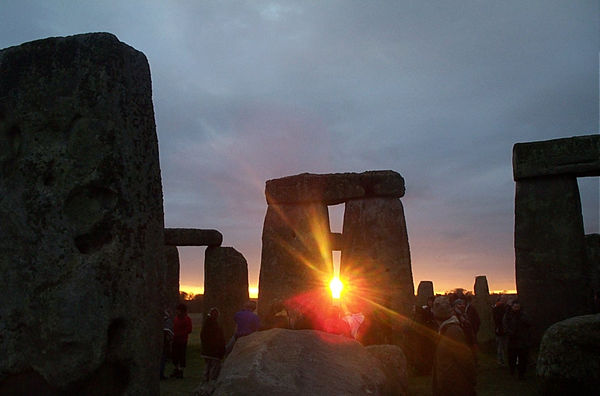
Yule
Scél lem dúib dordaid dam
snigid gaim rofáith sam
Gáeth ard úar ísel grían
geir a rrith ruirthech rían.
Rorúad rath rocleth cruth
Rogab gnáth giugrann guth
rogab úacht etti én
aigre ré é mo scél.
I have a tale for you: a stag bells;
winter pours, summer has gone.
The wind is high, cold; the sun is low;
its course is short, the sea is strong running.
The bracken is very red; its shape has been hidden.
The cry of the barnacle goose has become usual.
Cold has taken the wings of birds.
Season of ice crystals; this is my tale.
Translation: Jeffrey Huntsman
Tuesday, October 31, 2006
By Grabthar's Hammer...
...by the sons of Worvan...we shall be avenged.
You have 7 days.
Look at your calendar.
Look at next Tuesday.
Find a slot somewhere in there - anywhere.
Write down this word:
VOTE.
You have 7 days.
Look at your calendar.
Look at next Tuesday.
Find a slot somewhere in there - anywhere.
Write down this word:
VOTE.
Wednesday, October 11, 2006
Trobasattvas
For someone who gives a lot of lip service to the fact that music can be a strong part of a person’s spiritual path, I certainly suffer from a lot of doubt and despair on the same subject. Sometimes I wonder: even if I myself love the music I choose to play, and even though I am moved by it, does it do anyone a lick of good to hear seven verses of a troubadour song in a foreign language? Am I a hypocrite to sing sacred music from a religious tradition I don’t buy, even if I’m moved by the music and the lyrics? Does playing 2 hours of diddly-jigs for a mostly-drunken audience warrant the stern Zen admonition “do not waste your life?”
Once, when one of these grey doubt-funks descended on me, I asked one of my Buddhist teachers if being a musician was right livelihood. The short version of his answer is this: if it’s done with the intention of relieving the suffering of sentient beings, then it’s right livelihood. “Music brings happiness to other beings,” he said, “So it’s good.” Alright, I thought. If the drunks are experiencing a couple of hours of relief from their suffering, then I guess I’m not wasting anything (though it’s unclear whether Turlough O’ Carolan or John Barleycorn will get the merit for that one.)
I got two more answers this week. The first one came when my Mom told me that one of our medieval CDs, “Saint Francis and the Minstrels of God,” had been a great comfort to the dying mother of one of her friends. The story moved me very much – although I lay the merit at the feet of St Francis, who had been either the author of, or the inspiration for, all the music and lyrics on the recording, and we just sort of channeled it.
Then, in the latest issue of Shambala Sun I saw my question asked again, only about poetry, not music; and it was asked by the late Allen Ginsberg. This was transcribed from a talk once given by Ginsberg.
If civilization’s not going to be around that long, certainly not my books or records, what’s the use of poetry? What function has poetry got if the world is going to hell in a handbasket? Gehlek Rinpoche’s answer was really great and clear; the relief of suffering, the relief of mass human suffering…
That instruction or direction is a good compass for any vocation, but it’s particularly applicable to the rudderless poet who is shifting from preservation of his own ego or projection of immortality or the romance of being a poet, to an activity that functions well for other people...
Ginsberg then articulates the connection between meditation and its application to poetics, and continues:
… if you can show your mind, it reminds people that they have got a mind. If you can catch yourself thinking, it reminds people they can catch themselves thinking. If you have a vivid moment that’s more open and compassionate, it reminds people that they have those vivid moments.
By showing your mind as a mirror, you can make a mirror for other people to recognize their own minds and see familiarity and not feel that their minds are unworthy of affection or appreciation. Basically, poetics is appreciation of consciousness, appreciation of our own consciousness.”
OK – I get it. Appreciation of our own consciousness, and I would add, the expansion of our own consciousness to include something bigger than Itself. Doesn’t matter whether it’s Italian laude spirituali,Qawwali music, Monteverdi’s 1610 Vespers, or truly great, heart-stopping rock and roll. I know what music has done for me; and perhaps that’s the answer to my question. I’m no different than anyone else, and if music has jolted me into transcendent states of consciousness, or reminded me that I’m more than my tiny little mind, or relieved my suffering for 5 minutes, well…amen, brother, blessed be, namaste.
Friday, September 15, 2006
Gogs and Magogs
Doesn't the world have enough trouble and strife without having the leader of the Roman Catholic Church in the 21st century take a poke at Islam by quoting a 14th-century emperor?
From the Associated Press:
“Benedict quoted from a book recounting a conversation between 14th-century Byzantine Christian Emperor Manuel Paleologos II and a Persian scholar on the truths of Christianity and Islam.
“The Emperor comes to speak about the issue of jihad, holy war,” the Pope said. “He said, I quote, ‘Show me just what Mohammed brought that was new, and there you will find things only evil and inhuman, such as his command to spread by the sword the faith he preached.”
OK - so there are passages in the Qu'ran that have to do with spreading the faith by the sword. Are there no such passages in the Bible? Does God not smite the bejeepers out of the enemies of the Israelites about a jillion times? Hey, let's try the opening of the Book of Judges: "After the death of Joshua, the Iraelites inquired of the Lord which tribe should attack the Canaanites first. The Lord answered, 'Judah shall attack. I hereby deliver the country into his power.'" I don't hear the Pope reading that tidbit (yet.) And how about Christians? I sat through plenty of Scripture readings about smiting and banishing and exterminating, and we won't even talk about the Book of Revelations, and its plagues, oceans of blood, and an eternity of sulphur for everyone except The Faithful (whoever that is).
Sure, there are Muslim extremists who take the passage from the Qu'ran literally. Have you ever met any non-Muslim extremists? Have you looked at beautiful downtown Beirut lately? D'ya think there have been any Christian extremists who think maybe they should spread the Christian faith with the sword? Ever heard of a guy named Richard the Lionhearted? Ever heard of Ferdinand and Isabella? Oliver freaking Cromwell? I could go on...
I have about the most aggressively Roman Catholic Italian surname on the planet. Guess what? The branch of ancestors who took that surname were formerly-Jewish conversos. Why did they become conversos? Because someone came to the door, sang a few Cantigas and sold them a Vulgate Bible? NO. They converted because a bunch of Renaissance wingnuts were "spreading their faith with their swords." Did it work? I don't know -- four hundred years and many generations later, my Italian grandfather still liked to kvetch about the Catholic Church, and told me one day that most religion was "all-a bullsheet." Spreading religion with the sword ultimately doesn't work, and I would venture to guess that the vast majority of Muslims on this earth believe that too.
One more thing: Did anyone notice that the Pope never mentioned the Persian Scholar's answer to Manuel Paleologos? Is anyone else wondering what it was??
From the Associated Press:
“Benedict quoted from a book recounting a conversation between 14th-century Byzantine Christian Emperor Manuel Paleologos II and a Persian scholar on the truths of Christianity and Islam.
“The Emperor comes to speak about the issue of jihad, holy war,” the Pope said. “He said, I quote, ‘Show me just what Mohammed brought that was new, and there you will find things only evil and inhuman, such as his command to spread by the sword the faith he preached.”
OK - so there are passages in the Qu'ran that have to do with spreading the faith by the sword. Are there no such passages in the Bible? Does God not smite the bejeepers out of the enemies of the Israelites about a jillion times? Hey, let's try the opening of the Book of Judges: "After the death of Joshua, the Iraelites inquired of the Lord which tribe should attack the Canaanites first. The Lord answered, 'Judah shall attack. I hereby deliver the country into his power.'" I don't hear the Pope reading that tidbit (yet.) And how about Christians? I sat through plenty of Scripture readings about smiting and banishing and exterminating, and we won't even talk about the Book of Revelations, and its plagues, oceans of blood, and an eternity of sulphur for everyone except The Faithful (whoever that is).
Sure, there are Muslim extremists who take the passage from the Qu'ran literally. Have you ever met any non-Muslim extremists? Have you looked at beautiful downtown Beirut lately? D'ya think there have been any Christian extremists who think maybe they should spread the Christian faith with the sword? Ever heard of a guy named Richard the Lionhearted? Ever heard of Ferdinand and Isabella? Oliver freaking Cromwell? I could go on...
I have about the most aggressively Roman Catholic Italian surname on the planet. Guess what? The branch of ancestors who took that surname were formerly-Jewish conversos. Why did they become conversos? Because someone came to the door, sang a few Cantigas and sold them a Vulgate Bible? NO. They converted because a bunch of Renaissance wingnuts were "spreading their faith with their swords." Did it work? I don't know -- four hundred years and many generations later, my Italian grandfather still liked to kvetch about the Catholic Church, and told me one day that most religion was "all-a bullsheet." Spreading religion with the sword ultimately doesn't work, and I would venture to guess that the vast majority of Muslims on this earth believe that too.
One more thing: Did anyone notice that the Pope never mentioned the Persian Scholar's answer to Manuel Paleologos? Is anyone else wondering what it was??
Monday, September 11, 2006


Saturday, July 08, 2006
Tonglen O'Reillys
(no imagination required)
breathe out mixolydian mode
may all beings have happiness
breathe in requests for danny boy
breathe out mysterious communion,
wrung from metal, wood and magic
breathe in all this week’s delusions
breathe out ways to be together
no self no other no alone
Oblivious to tradition
something keeps making them come here
mindstreams flow from no beginning
a la recherche du jigs perdu
I will dedicate the merit
of all these lowered seventh chords
To the benefit of all beings

and someone started whistling it on the TV in the other room
Wednesday, June 21, 2006
Quiet Mind
Quoted from the book "Radical Acceptance," by Tara Brach:

"In a classic Zen story, the disciple Hui K'e asks his master, Bodhidharma, "Please help me to quiet my mind."
Bodhidharma responds by saying "Bring me your mind so that I can quiet it."
After a long moment of silence, Hui K'e says, "But I can't find my mind."
"There," Bodhidharma replies with a smile, "I have now quieted your mind."
"In a classic Zen story, the disciple Hui K'e asks his master, Bodhidharma, "Please help me to quiet my mind."
Bodhidharma responds by saying "Bring me your mind so that I can quiet it."
After a long moment of silence, Hui K'e says, "But I can't find my mind."
"There," Bodhidharma replies with a smile, "I have now quieted your mind."
Wednesday, April 26, 2006
Riding the Magic Carpet - reflections on teaching music
Have you ever been in a place that was actually silent?

(zzzzing! goes Manjushri's sword.)
There are still performers who can do this - who can let go of Themselves and become living embodiments of the music, the story, or the song.

Saturday, April 15, 2006
Wake Up, Earthlings: your hair is on fire.
If there were a huge comet hurling toward the Earth, there would be 24/7 coverage on every network. If there were ANYTHING humanity could do to turn it away, it would be done.

Guess what. There is a huge comet hurling toward Earth. It's called Global Warming.
Planets get destroyed for any number of cosmic reasons. How appalling to have ours destroyed by apathy, greed, and disbelief .
I wonder what on earth today's children will think of my generation, and their grandparent's generation, if we leave them with a world of sinking cities, devastating storms, melting polar icecaps, baking droughts, all because we were too cheap, and too enslaved by the oil and auto industry, to produce electric cars and solar-powered buildings.
Three dangerous attitudes that work against saving ourselves:
1) "Oh, these guys are all alarmists; this will never happen." The mass of evidence suggests that it not only WILL happen, but it IS happening. And philosophically, why wouldn't the planet die, or become uninhabitable, if it's abused? We have tons of galactic evidence that planets change and/or perish all the time. Why not this one? Everything changes continually, and everything ends. In this regard, humans and the planet Earth are in the same boat. The Vulcans are not going to come and save us OR the whales.
2) "The Rapture is going to come and save all Christ's chosen people, so we don't have to worry about all that environment stuff." If you think that no educated sentient being could possibly believe this, you do not live in west Texas.
3) "I can't afford to worry about this. I have to get to work in my car everyday. I don't have time to go live off the land." Neither do I. I can't afford a new hybrid car and I can't run out and build myself a solar-powered off-the-grid house either. But we CAN do the following things. We can educate ourselves, so that we know the actual gravity of the situation. We can tell everyone we know about it - family, friends, students, church, sangha, pagan gathering, book club, tea party, card game, whatever is "community" for you. And, once we've all done that, we can put financial and political pressure on the people who CAN do something about reducing dependence on fossil fuels QUICKLY - now - not in some la-la future. Here's a start: stop voting for morons.
If 200 million people in this country all really believed that the world was facing a vast planetary catastrophe, we would be acting as though our hair was on fire.
Guess what. There is a huge comet hurling toward Earth. It's called Global Warming.
Planets get destroyed for any number of cosmic reasons. How appalling to have ours destroyed by apathy, greed, and disbelief .
I wonder what on earth today's children will think of my generation, and their grandparent's generation, if we leave them with a world of sinking cities, devastating storms, melting polar icecaps, baking droughts, all because we were too cheap, and too enslaved by the oil and auto industry, to produce electric cars and solar-powered buildings.
Three dangerous attitudes that work against saving ourselves:
1) "Oh, these guys are all alarmists; this will never happen." The mass of evidence suggests that it not only WILL happen, but it IS happening. And philosophically, why wouldn't the planet die, or become uninhabitable, if it's abused? We have tons of galactic evidence that planets change and/or perish all the time. Why not this one? Everything changes continually, and everything ends. In this regard, humans and the planet Earth are in the same boat. The Vulcans are not going to come and save us OR the whales.
2) "The Rapture is going to come and save all Christ's chosen people, so we don't have to worry about all that environment stuff." If you think that no educated sentient being could possibly believe this, you do not live in west Texas.
3) "I can't afford to worry about this. I have to get to work in my car everyday. I don't have time to go live off the land." Neither do I. I can't afford a new hybrid car and I can't run out and build myself a solar-powered off-the-grid house either. But we CAN do the following things. We can educate ourselves, so that we know the actual gravity of the situation. We can tell everyone we know about it - family, friends, students, church, sangha, pagan gathering, book club, tea party, card game, whatever is "community" for you. And, once we've all done that, we can put financial and political pressure on the people who CAN do something about reducing dependence on fossil fuels QUICKLY - now - not in some la-la future. Here's a start: stop voting for morons.
If 200 million people in this country all really believed that the world was facing a vast planetary catastrophe, we would be acting as though our hair was on fire.
Friday, April 14, 2006
Carpe Veritatem
Good Friday Musings on the latest Religious Kerfuffles:
RE / The Da Vinci Code:
It's a STORY. The story is a NOVEL (a term which implies fiction). Yes, it's thought-provoking. But I'm not sure that this story is as heretical as it's cracked up to be. What if Jesus WAS married to Magdalen? The point of Christianity is the Resurrection, not whether Jesus ever kissed a girl. If this book upsets you, then perhaps, as the famous bumper sticker says, your karma ran over your dogma.
RE / The Crusades:
The Crusades were a bad idea. Can someone explain to me how one Pope can apologize for them and the next Pope basically say just kidding, they were OK?
RE / Harry Potter:
My generation listened to Black Sabbath and watched Dark Shadows and ran amok in the neighborhood every Halloween. We curled up in our jammies with our families every year and watched a famous film featuring wizards, witches and flying monkeys, in which a sweet little girl from Kansas munches hallucinogenic poppies with a lion, a sentimental funnel and a loquacious scarecrow, is nearly killed by a witch, meets an inept wizard, and is saved by a bright little telepathic dog and a giant fairy. Please do not tell me that my generation was driven away from God; many of them not only GOT religion when they got older, but got a particularly conservative or intolerant version of it - and God help us, they're also having conniption fits about Harry Potter. (I blame the flying monkeys.)
RE / the flap about the Gospel of Judas:
Why is everyone so darned shocked by this? People have been wondering since time immemorial what on earth would provoke one of Christ's disciples to flake out and turn him in. It seems to me there was an entire rock opera based on speculation about this (remember Jesus Christ Superstar?)
1) Let's start with the premise that Jesus was a highly evolved spiritual being, Son of God, God Himself, or whatever you believe.
2) Suppose Jesus, being all of the above, KNEW that in order to accomplish his spiritual quest / mission / goal, he had be martyred in some horrible way.
3) Suppose Jesus, being all of the above, KNEW that he needed someone to take a role in this quest, by whose agency he would be turned in to the authorities.
4) Suppose Jesus, being all of the above, KNEW that he needed to be turned in by someone who could be trusted to actually follow through, and who had the spiritual fortitude to do it. Suppose Jesus ASKED Judas to take on this terrible task (which is what the Gospel of Judas suggests).
Advance a few centuries.
1) SUPPOSE that repressing the Gospel of Judas and the other Gnostic Gospels seems like a pretty good idea, because of a particular combination of early church politics.
2) SUPPOSE that having an evil Judas furthered the medieval (and post-medieval) agenda of blaming the whole nasty and lamentable business on those awful Jews. (Oops, we forgot Jesus was a Jew - our bad.)
Is the Christian faith so tenuous and in so much trouble that it can't handle some discussion about Judas? Whether Judas was or was not appointed by Christ to do the "betrayal" takes nothing away from a belief in the Resurrection. If anything, it would make it rather more astounding, wouldn't it, if Christ knew what was happening, and orchestrated it?
And wouldn't it be a profound spiritual teaching to ponder that if Jesus called upon Judas to do what Judas did, then Judas was forgiven / redeemed before he ever took action? And is it not then heartbreaking to think of Judas taking his own life in a frenzy of grief?
Here's my own little Urbi et Orbi speech: it's ALL ABOUT INTENTION. Every moment of every day of every life springs from an intention. It is the INTENTION that determines the quality of an action AND the karmic baggage that goes along with it.
Which brings me back to the religious kerfuffles. What the heck is the intention behind saying that maybe the Crusades were OK after all? Or behind squelching any and all dialogue about alternate interpretations of religious teachings, or behind demonizing every child's delightful penchant for magical thinking, or behind roadblocking every attempt to take a Major World Religion into the 21st Century?
NNNNNNNNoooooo one expects - Oh, sorry, sorry - NNNNNNNNNNo one USED to expect....I mean at least no one was expecting since the second half of the twentieth century - I mean - sorry, sorry...PERHAPS we now possibly expect...oh blast.

RE / The Da Vinci Code:
It's a STORY. The story is a NOVEL (a term which implies fiction). Yes, it's thought-provoking. But I'm not sure that this story is as heretical as it's cracked up to be. What if Jesus WAS married to Magdalen? The point of Christianity is the Resurrection, not whether Jesus ever kissed a girl. If this book upsets you, then perhaps, as the famous bumper sticker says, your karma ran over your dogma.
RE / The Crusades:
The Crusades were a bad idea. Can someone explain to me how one Pope can apologize for them and the next Pope basically say just kidding, they were OK?
RE / Harry Potter:
My generation listened to Black Sabbath and watched Dark Shadows and ran amok in the neighborhood every Halloween. We curled up in our jammies with our families every year and watched a famous film featuring wizards, witches and flying monkeys, in which a sweet little girl from Kansas munches hallucinogenic poppies with a lion, a sentimental funnel and a loquacious scarecrow, is nearly killed by a witch, meets an inept wizard, and is saved by a bright little telepathic dog and a giant fairy. Please do not tell me that my generation was driven away from God; many of them not only GOT religion when they got older, but got a particularly conservative or intolerant version of it - and God help us, they're also having conniption fits about Harry Potter. (I blame the flying monkeys.)
RE / the flap about the Gospel of Judas:
Why is everyone so darned shocked by this? People have been wondering since time immemorial what on earth would provoke one of Christ's disciples to flake out and turn him in. It seems to me there was an entire rock opera based on speculation about this (remember Jesus Christ Superstar?)
1) Let's start with the premise that Jesus was a highly evolved spiritual being, Son of God, God Himself, or whatever you believe.
2) Suppose Jesus, being all of the above, KNEW that in order to accomplish his spiritual quest / mission / goal, he had be martyred in some horrible way.
3) Suppose Jesus, being all of the above, KNEW that he needed someone to take a role in this quest, by whose agency he would be turned in to the authorities.
4) Suppose Jesus, being all of the above, KNEW that he needed to be turned in by someone who could be trusted to actually follow through, and who had the spiritual fortitude to do it. Suppose Jesus ASKED Judas to take on this terrible task (which is what the Gospel of Judas suggests).
Advance a few centuries.
1) SUPPOSE that repressing the Gospel of Judas and the other Gnostic Gospels seems like a pretty good idea, because of a particular combination of early church politics.
2) SUPPOSE that having an evil Judas furthered the medieval (and post-medieval) agenda of blaming the whole nasty and lamentable business on those awful Jews. (Oops, we forgot Jesus was a Jew - our bad.)
Is the Christian faith so tenuous and in so much trouble that it can't handle some discussion about Judas? Whether Judas was or was not appointed by Christ to do the "betrayal" takes nothing away from a belief in the Resurrection. If anything, it would make it rather more astounding, wouldn't it, if Christ knew what was happening, and orchestrated it?
And wouldn't it be a profound spiritual teaching to ponder that if Jesus called upon Judas to do what Judas did, then Judas was forgiven / redeemed before he ever took action? And is it not then heartbreaking to think of Judas taking his own life in a frenzy of grief?
Here's my own little Urbi et Orbi speech: it's ALL ABOUT INTENTION. Every moment of every day of every life springs from an intention. It is the INTENTION that determines the quality of an action AND the karmic baggage that goes along with it.
Which brings me back to the religious kerfuffles. What the heck is the intention behind saying that maybe the Crusades were OK after all? Or behind squelching any and all dialogue about alternate interpretations of religious teachings, or behind demonizing every child's delightful penchant for magical thinking, or behind roadblocking every attempt to take a Major World Religion into the 21st Century?
NNNNNNNNoooooo one expects - Oh, sorry, sorry - NNNNNNNNNNo one USED to expect....I mean at least no one was expecting since the second half of the twentieth century - I mean - sorry, sorry...PERHAPS we now possibly expect...oh blast.
Monday, April 10, 2006
Taking away the flag of ego
This is a quote from the late Zen master Dainin Katagiri Roshi:

"We can say that Buddhist practice has two aspects: to constantly seek Truth and to go into the human world.
"If you want to be a pianist, devote yourself to studying and practicing the piano. This is the mind that seeks Truth. But though you may eventually reach a lofty stage as a musician, it is not good enough. You have to descend into the human world as well. Your life, your presence, your personality must touch people's hearts directly. This means you have to go beyond being a pianist.
"It is relatively easy to teach people to be musicians, but it is not so easy to teach them how to go beyond being a musician. If you would teach this to others, your mind must be based on compassion. When you teach, you have to pierce the human heart and take away the flag of ego. So your compassion must extend beyond the words you use. Then your penetrating words will teach, and not injure."

"We can say that Buddhist practice has two aspects: to constantly seek Truth and to go into the human world.
"If you want to be a pianist, devote yourself to studying and practicing the piano. This is the mind that seeks Truth. But though you may eventually reach a lofty stage as a musician, it is not good enough. You have to descend into the human world as well. Your life, your presence, your personality must touch people's hearts directly. This means you have to go beyond being a pianist.
"It is relatively easy to teach people to be musicians, but it is not so easy to teach them how to go beyond being a musician. If you would teach this to others, your mind must be based on compassion. When you teach, you have to pierce the human heart and take away the flag of ego. So your compassion must extend beyond the words you use. Then your penetrating words will teach, and not injure."
Tuesday, April 04, 2006
Bloggiesattvas
As long as space remains...
we'll still have brains
like runaway trains - hence, we have blogs.
"Dharma" being the word for the teachings of the Buddha, and "Harmonia" being the ancient Greek word for the " music of the spheres," I decided to combine them.
Plus it's a pun on a radio program, but more on that later.
As for the monkey mind part, that will become obvious.
we'll still have brains
like runaway trains - hence, we have blogs.
"Dharma" being the word for the teachings of the Buddha, and "Harmonia" being the ancient Greek word for the " music of the spheres," I decided to combine them.
Plus it's a pun on a radio program, but more on that later.
As for the monkey mind part, that will become obvious.
Subscribe to:
Posts (Atom)